
On a spiritual level, this act symbolises a human being’s willingness to give up or detach from those barriers (such as wealth, pride and arrogance) which weaken our faith and hold us back from seeking closeness to Allah (swt). It is a time for people to reflect on what changes we need to make within ourselves to become better human beings.
“(If you wonder why Allah needs your Qurbani’s flesh and blood?) It is not their flesh or their blood that reaches Allah. Rather, it is your God-wariness (sacrificial spirit to revere and obey Him) that reaches Him and raises you close to Him…”
– Surah Al-Hajj, 22:37
The history of Qurbani
The practice of Qurbani can be traced back to Prophet Ibrahim (as) and his willingness to sacrifice his son, Ismail (as), as an act of submission to Allah’s (swt) command. At the time of the great sacrifice, Allah (swt) intervened and provided Ibrahim (as) with a lamb to sacrifice instead, thereby establishing the essence of Qurbani.
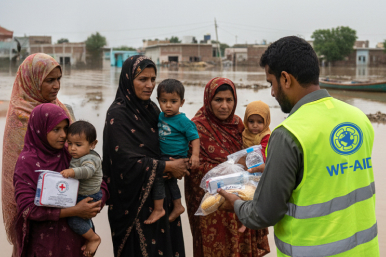
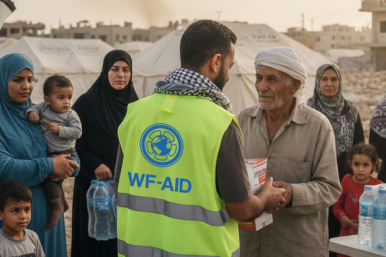
WF-AID facilitates Qurbani for Sadaqah, Aqiqah and Hajj which is carried out on goats, with the meat distributed to families in need across East Africa.